Cars use the front brakes harder because the weight shifts forward when you slow down. The rears stabilize the car and handle the parking brake duties. Knowing which end is wearing first helps you budget, avoids guesswork, and prevents replacing parts that still have life left.
Clues That Point To Front Brake Wear
A steering wheel shimmy during medium to hard stops usually starts up front. Pulsation felt mostly in the wheel often means rotor thickness variation or hot spots at the front. You may also notice more nose-dive, longer stopping distances on rough roads, or a faint chirp at parking lot speeds that quiets when you press the pedal slightly. Those are classic front-wear indicators.
Clues That Point To Rear Brake Wear
Light scraping from behind you at slow speeds is a common rear warning. If your parking brake struggles to hold on a mild incline, the rear pads or shoes may be thin, or the mechanism needs service. A brief grind in the morning can be surface rust clearing, but if noise continues once warm and dry, suspect the rears. A low pedal that firms up after a quick second press can also hint at rear pad knock-back or sticky slide pins.
Simple Driveway Checks You Can Do Safely
- Park on level ground, set the parking brake, and chock a wheel.
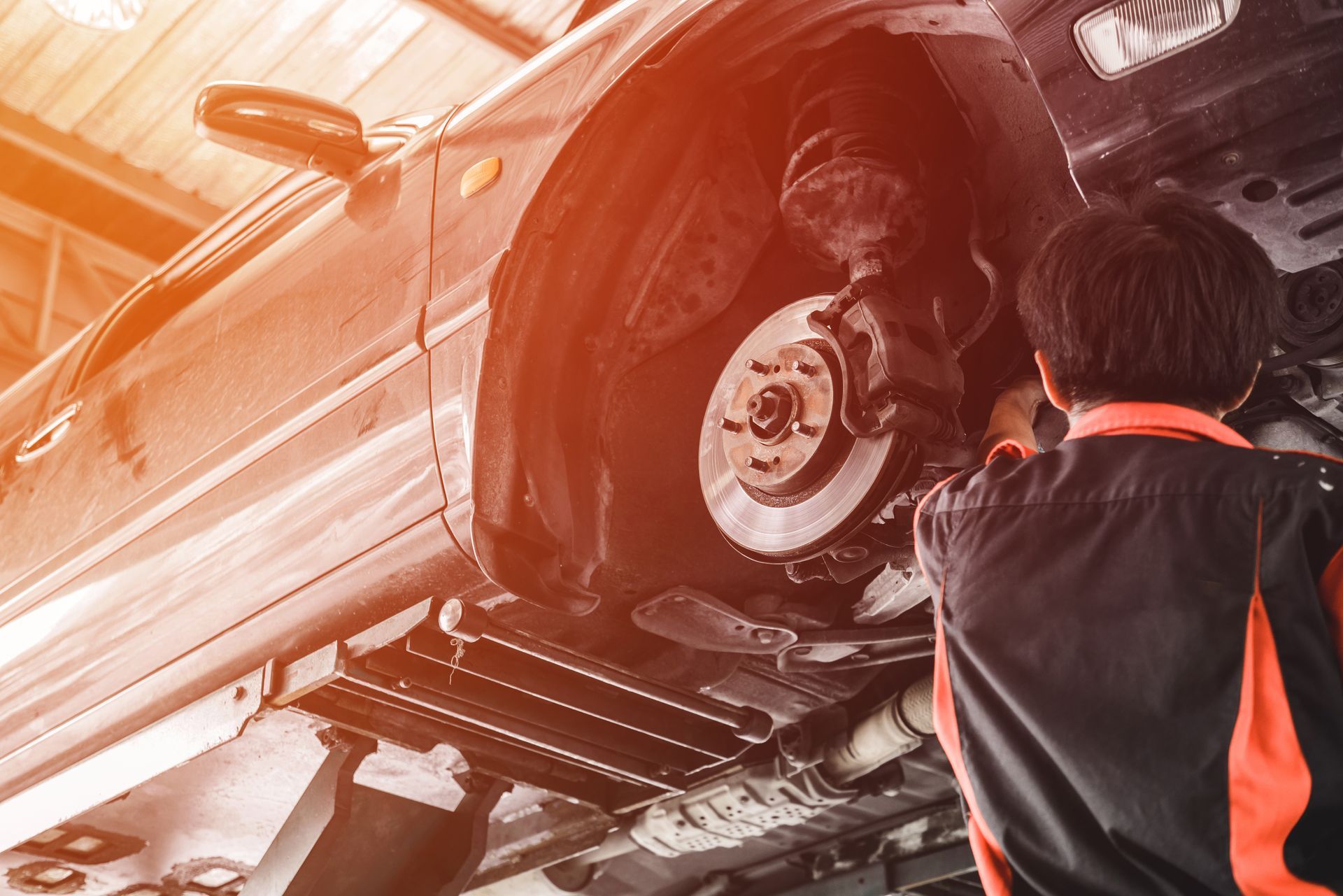
- With a flashlight through the spokes, find the outer pad and compare the thickness side to side. Anything near a few millimeters needs attention.
- If safely lifted, spin each wheel by hand. A wheel that drags or smells hot after a short drive points to a sticking caliper.
- Look for uneven wear on one side of an axle. A thin pad on one corner and a thick pad on the other suggest a slide or caliper issue that will return if not fixed.
What Different Noises Usually Mean
- High, steady squeal at low speed: Often a wear indicator tab touching the rotor.
- Grinding, metallic growl: Pad may be down to the backing plate on one side, which quickly damages the rotor.
- Single click on first brake vs. repeated clunks over bumps: One click can be normal pad movement; repeated clunks suggest loose hardware or worn suspension bushings that need inspection.
Pedal Feel And How The Car Behaves When You Stop
A healthy system gives a firm pedal that holds height at a stop. A slow sink at a light suggests a hydraulic issue and should be checked soon. If stops feel straight around town but the pedal grows long after a downhill, pads may be thin or glazing. A pull to one side during braking usually points to uneven front braking. A wiggle in the rear of the car or early ABS activation at modest speeds can point to rear imbalance or contaminated rotors.
Why Even Wear And Proper Service Are Needed
Brakes work as a team. If one corner wears faster, heat spreads unevenly and can glaze pads or create rotor hot spots. That reduces performance in rain and confuses stability systems that expect both sides of an axle to behave the same. Good service includes replacing pads and rotors in axle pairs, cleaning and lubricating slide pins, confirming the parking brake operates freely, and finishing with an even torque on wheels so rotors stay true.
When It Is Time To Schedule Service
Move your appointment forward if you hear grinding, feel a strong shudder at highway stops, smell heat at one wheel, or see pad material thinner than a few millimeters. Warning lights for ABS, traction, or the parking brake also deserve prompt attention. Catching brakes before the metal contacts the rotor saves money and keeps stopping power strong.
Get Smooth, Safe Stops With George’s Complete Auto Repair In Cape Coral, FL
If you are unsure whether the fronts or rears are due, we can tell you in minutes. Our technicians measure pad thickness, check rotor condition and runout, free and lubricate slides, verify parking brake operation, and road test so the pedal feels firm and the car stops straight.
Schedule a brake inspection with
George’s Complete Auto Repair in Cape Coral, FL, and drive with confidence.